

Audition Repertoire Requirements

The minimum for all students will be two contrasting pieces on each applied instrument/voice or area with a level of difficulty equivalent to repertoire indicated below. Please see your applied area below for specific audition requirements, as well as representative repertoire.

Brass

Prepare two compositions of contrasting style that best represents your performance level. The compositions need not be long and may include a representative etude. In addition, you will be asked to perform major scales and to sight-read some passages chosen to suit your technical capabilities.

Repertoire

French Horn: Mozart Concertos II & III; R. Strauss Concerto No. 1; Beethoven Sonata; Brahms Trio
Trumpet: Fitzgerald English Suite; Corelli-Powell Prelude and Minuet; Balay Petite Piece Concertante; Bond-Finzi Concerto No. 1; Fiocco-Owen Arioso; Petit Etude de concours; Eckard 12 Program Solos; Handel-Powell Sonata No. 3
Trombone: Marceau Symphonique; Muhlfeld Concertstuck; David Concertino; Marcell Sonatas
Euphonium: Schubert, F. / Davis, Allegro Moderato; Beethoven, L./Dishinger, May Song Op. 52 #4
Tuba: Bach Come, Sweet Death, Catozzi, Beelzebub; Hartley Fantasia for Tuba

Classical Guitar

Prepare two compositions of contrasting style that best represent your abilities on the guitar. In addition, you will be asked to sight-read some passages chosen to suit your technical capabilities.

Repertoire

Etudes by Ernesto García de León, Carlo Domeniconi, Matteo Carcassi; Major/minor scales by Andrés Segovia; 120 Right-Hand Studies (Mauro Giuliani)

Jazz

Be able to play (melody and improvisation) a prepared piece of your choice and improvise on a blues progression in the concert key of Bb, F, or C. In addition, you will be asked to perform major and minor scales, and to sight-read some passages chosen to suit your technical capabilities.

Repertoire

General: Autumn Leaves, Blue Monk, Impressions, Maiden Voyage, Now’s The Time, Satin Doll, Take the ‘A’ Train, Summertime
Drums: “Progressive Steps to Syncopation” by Ted Reed, “The All American Drummer” by Charles Wilcoxon, “Creative Coordination” by Keith Copeland, “The Art of Bop Drumming” by John Riley, “Beginning Chart Reading” by Gil Graham

Organ

Applicants must present two compositions: one organ composition by J.S. Bach, and the other in a contrasting style. Applicants may audition on the organ or the piano. In addition, you will be asked to perform major scales and to sight-read some passages chosen to suit your technical capabilities.

Repertoire

Gleason Method of Organ Playing (selected studies); Bach Christ lag in Todesbanden, Gelobet seist du, Jesu Christ, Vater unser im Himmerlreich, Ich ruf’zu dir, Alle Menschen müssen sterben (from Orgelbüchlein), Prelude and Fugue in E Minor; basic hymn playing

Piano and Harpsichord

The minimal level of repertoire will be the Essential Keyboard Repertoire (elementary level) or equivalent. Performance and music education majors will be required to perform at least one of the more challenging pieces below for admission to that degree track, with at least one piece from memory. For these degree tracks, a functioning knowledge of scales and arpeggios will also be expected. In addition, you will be asked to sight-read some passages chosen to suit your technical capabilities.

Repertoire

Piano: Sonatina movement of Clementi, Kuhlau; Schumann, easier pieces from Album for the Young, Kinderszenen, Waldszenen; Bartok, Mikrokosmos, Books II or III
Harpsichord: Igor Kipnis First Harpsichord Book; Bach Two and Three Part Inventions.

Percussion

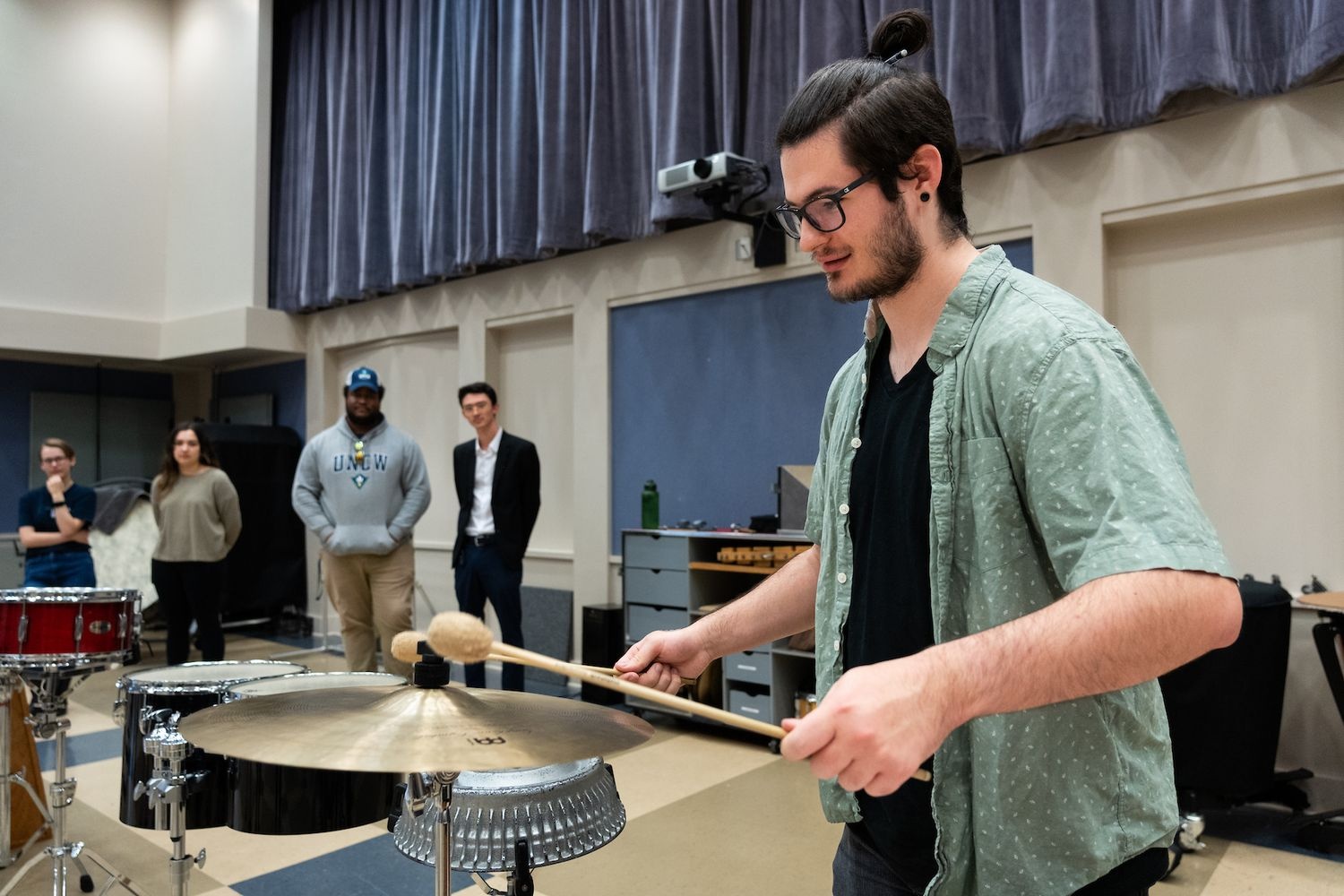
Applicants should prepare one solo in at least two of the following three percussion categories: snare drum, timpani, and mallet keyboard. Also expected will be major scales and sight-reading in one category of your choice.

Repertoire

Snare Drum: Whaley, Recital Solos; and either: Wilcoxon, The All American Drummer; or NARD Drum Solos
Marimba & Xylophone: McMillan, Percussion Keyboard Technique; Whaley, Fundamental Studies for Mallets; or Peters, Fundamental Method for Mallets Additional Mallet Solos: Asabuki, Water Drops; McMillan, Masterpieces for Marimba
Timpani: McMillan, Tympani Technique; Whaley, Musical Studies for the Intermediate Timpanist

Strings

You should prepare two works that best represent your performance level. The two works should be contrasting in style, one demonstrating tone and the other technique. You may be asked to perform major scales and to sight-read some passages chosen to suit your technical capabilities.

Repertoire

Violin: Sonatas of Handel; Nardini Concerto; Vivaldi Concerto in a minor, Beethoven Romances; Kreisler original compositions and other music of comparable difficulty
Viola: Sonatas of Hoffmeister, Corelli and Handel
Cello: One movement of Bach’s Suites or equivalent unaccompanied work from memory
String Bass: Two movements from a sonata by Galliard, Eccles, Loeillet or the equivalent

Voice

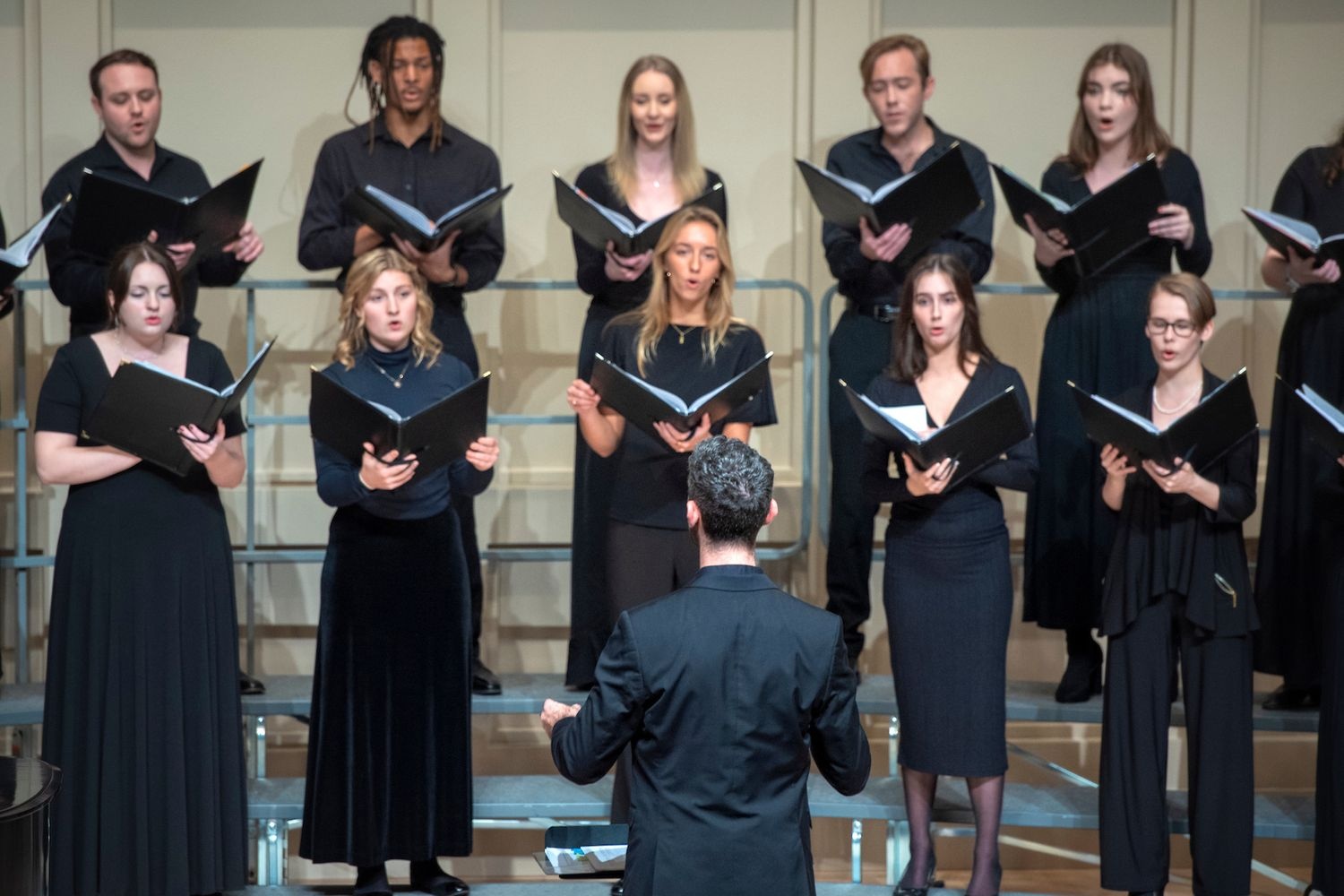
Applicants should be prepared to sing two contrasting classical songs from memory, one of which should be in Italian. Transfer students should include art songs in French or German, where appropriate. Students will be evaluated on vocal potential, expression and basic musical skills, including sight-reading a simple melody and selected technical exercises or warm-ups. An accompanist will be provided.

Repertoire

Italian songs of the 17th and 18th centuries; English songs/arias from Baroque and Contemporary eras; folk songs; musical theater pieces; accessible literature from German and French composers.

Woodwinds

Prepare two compositions of contrasting style that best represents your performance level. The compositions need not be long and may include a representative etude. In addition, you will be asked to perform major scales and to sight-read some passages chosen to suit your technical capabilities.

Repertoire

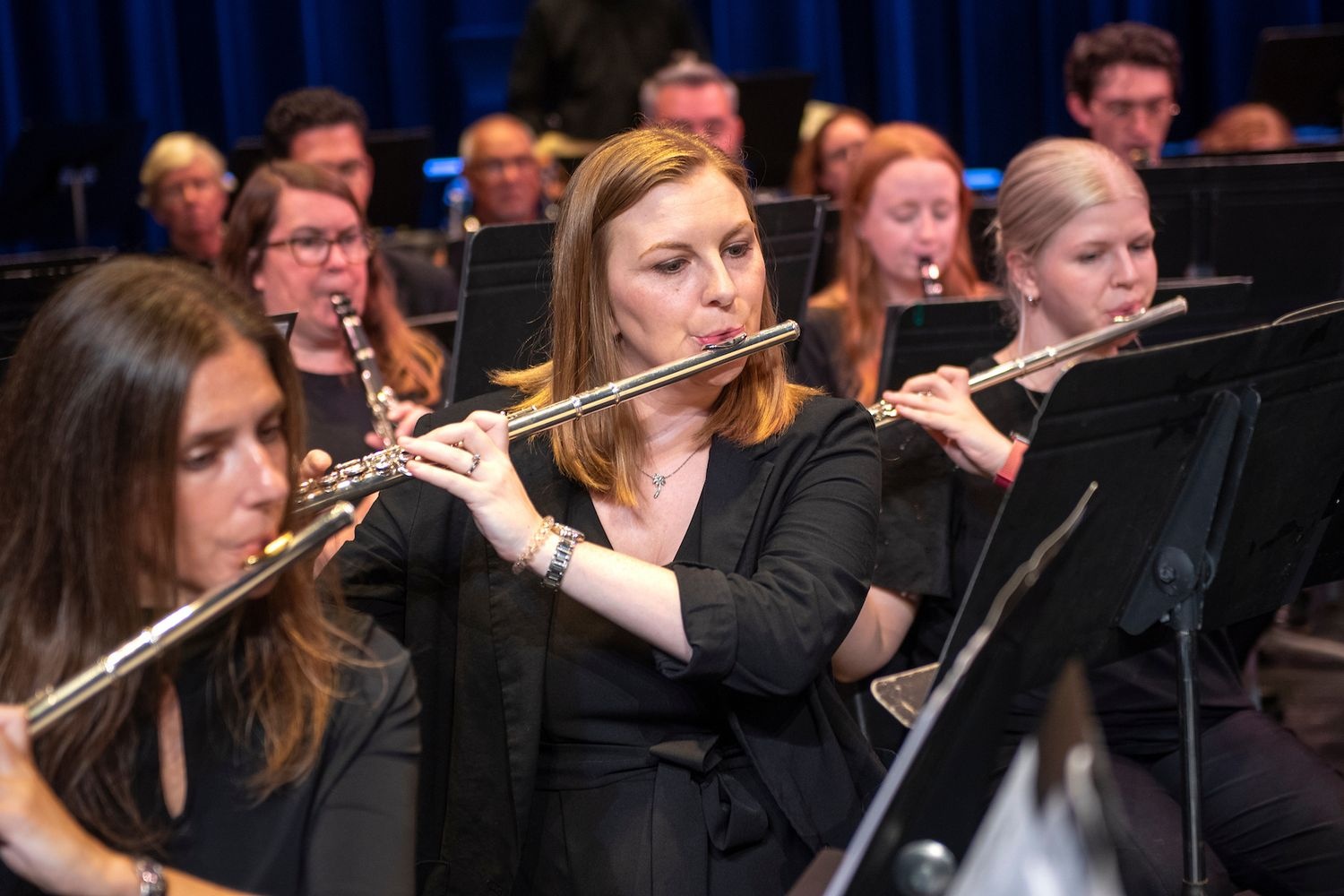
Flute: Cavally, 24 Short Concert Pieces for Flute; Rubank Book of flute Solos (Intermediate); Telemann Sonatas and Suite in A Minor; Schumann Three Romances; Mozart Andante in C; Gluck Minuet & Dance of the Blessed Spirit; Handel Sonatas
Oboe: Paris Conservatory Solos; Guilhaud, Concertino; Handel & Telemann Sonatas
Clarinet: Weber, Concerti; Vaughn Williams, Six Studies in English Folk Song; Schumann, Three Romances; Sonatinas by Heiden & Honegger
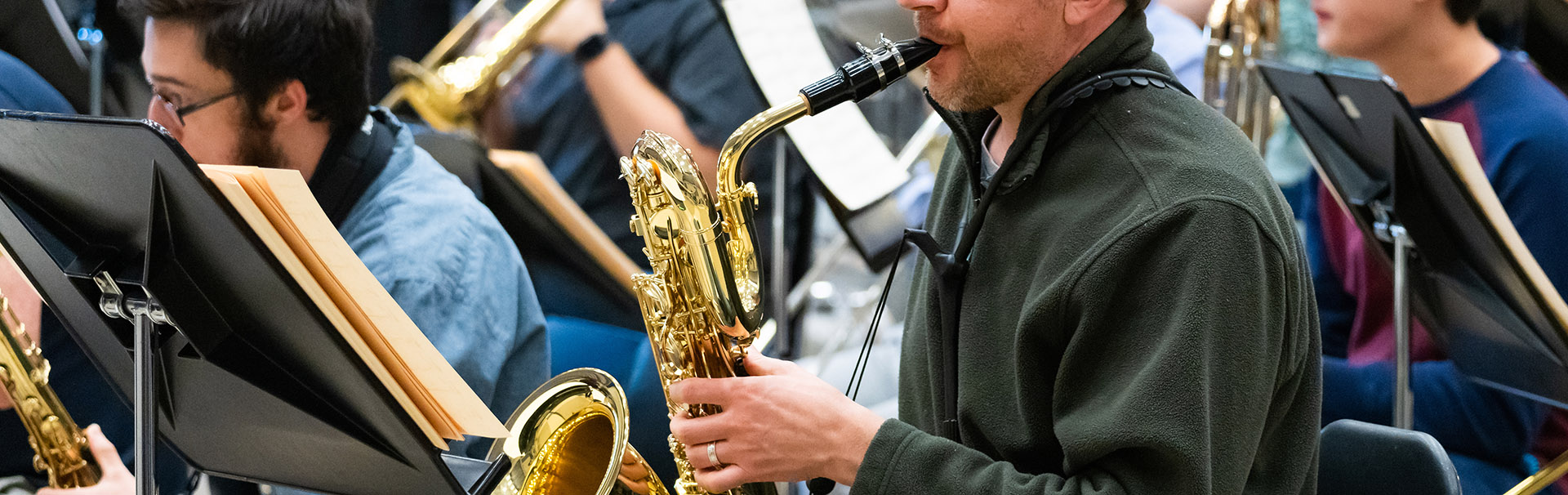
Saxophone: Solos for Saxophone (arr. by Larry Teal); Aria (Eugene Bozza); Sicilienne (Pierre Lantier); Dix Figures a Danser (Pierre-Max Dubois); Sonata (Henri Eccles/Rasher); Sonata No. 3 (G.F. Handel/Rascher); Adagio & Allegro (G.F. Handel/Gee); Three Romances, alto or tenor (Robert Schumann); Three Songs Without Words, alto & tenor (Paul Ben-Haim); Three Romances, alto or tenor (Robert Schumann); Beau Soir (Claude Debussy/Houlik)
Bassoon: Hindemith, Sonata; Telemann, Sonata in F minor; Beethoven, Adagio Cantabile; Vivaldi Concerti in A & B minor, Sonata in A minor


Divider
Maintained by S. Errante ( )
Copyright Notice | About this Site
You are in: Admissions
Department of Music