

Aural and Sightsinging Lab
MUSL 111 –
200 – Fall, 2005
Class T Th 9:30 – 10:20 AM, Room 201 , Kenan Auditorium
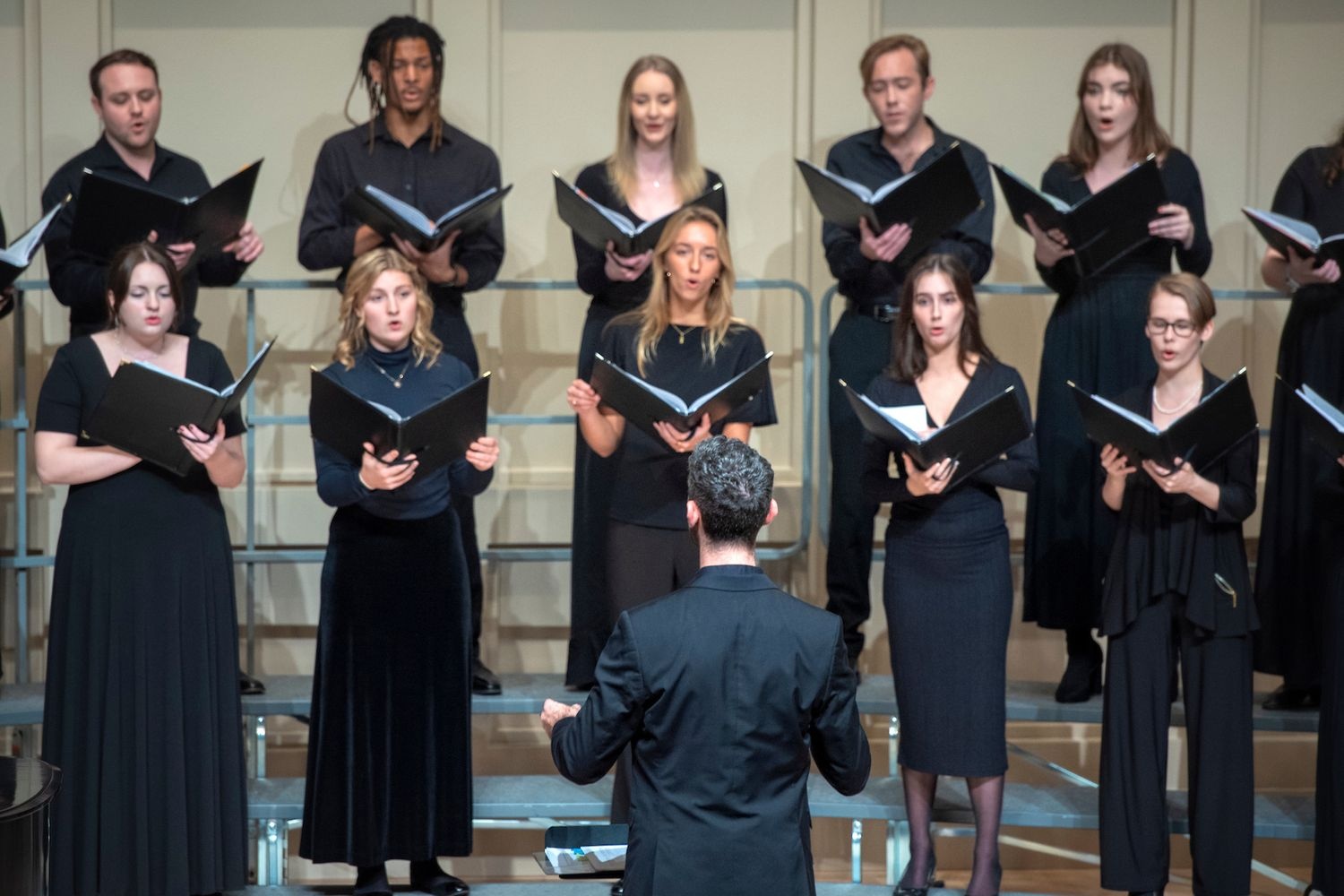
Course An introduction to the skills of sightsinging (using solfeggio), eartraining
Description (intervals, melodic dictation, rhythmic dictation, harmonic dictation) and
rudimentary keyboard skills.
Textbook Introduction to Sightsinging and Ear Training, 2nd ed., by Bruce Benward.
Instructor Dr. Mary Jo White, Assistant Professor in the Music Department
Office Office hours by appointment. See me after class or in Room 2022 at Randall
Library; 962-7727; WHITEMJ@UNCW.EDU
Concepts Rhythmically, the students will study whole and half beat values,
simple and compound meters, and duple and triple subdivisions of the beat.
In their singing and dictation exercises, they will study scalewise melodies in major and minor, arpeggiations of the I and V chords, and intervallic distances from minor second to perfect fifth. Harmonic dictation of the I, IV and V chords and their inversions will also be studied. The formation and fingering of major and harmonic minor scales and the I, IV, and V chords at the piano (for simple
chordal accompaniments) will be introduced.
Attendance REGULAR ATTENDANCE AND PRACTICE ARE ESSENTIAL
FOR DEVELOPING SIGHTSINGING AND EARTRAINING SKILLS. A five
point quiz will be given each class day. Quizzes will not be made up. Regular tests will only be made up with a valid excuse (i.e., illness, death in the family)
Grading Tests will be given every other Thursday beginning on Sept. 1. There will
be seven tests given to include two sightsinging exams, and five combination
dictation exams. The final grade will be based on the total number of points
(seven tests plus quiz total) divided by the following percentages:
90-100=A, 80-89=B, 70-79=C, 60-69=D, Below 60=F.
The University of North Carolina at Wilmington is committed to the proposition that the pursuit of truth requires the presence of honesty among all involved. It is therefore this institutionŐs stated policy that no form of dishonesty among its faculty or students will be tolerated.