


Storm Ready: How N.C.’s Coastal University Navigates Severe Weather
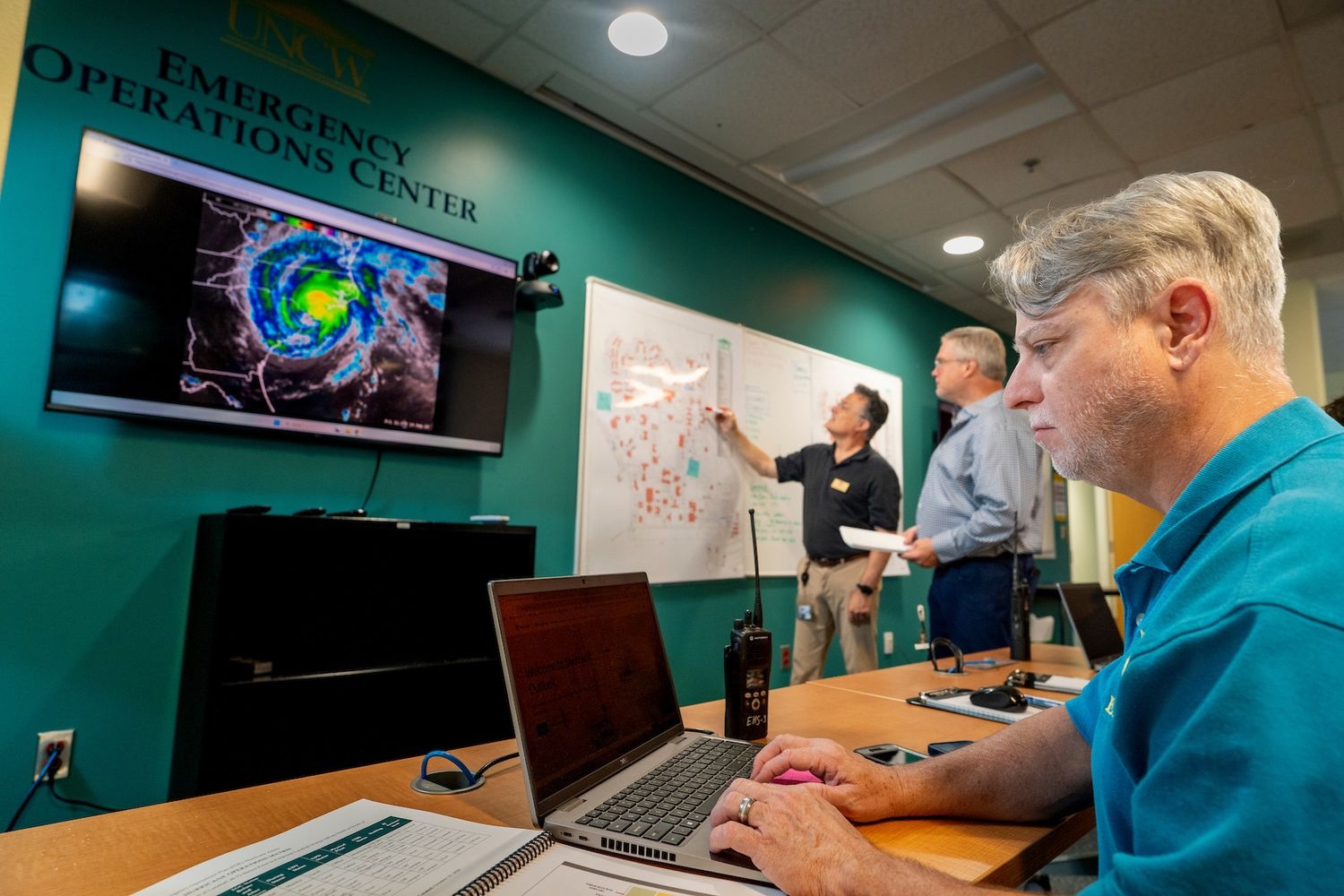
Photo: Jeff Janowski/UNCW
Hurricane season may be the furthest thing on the minds of most students as they start a new academic year. But across UNCW, university employees are in constant preparation. Long before a storm appears on National Weather Service radar, staff and leadership teams are planning for the challenges that coastal weather can bring.
Located about five miles from the Atlantic Ocean, UNCW officials understand the importance of preparing the campus for severe weather. Hurricanes are a reality of life on the coast, making readiness an ongoing commitment to safety.
The Atlantic hurricane season runs June 1 through Nov. 30.
“This year, hurricane projections are slightly below normal for the number of storms,” said Jeff Campbell, environmental health and safety director. “However, it only takes one storm to cause major problems, and we need to stay vigilant no matter what the predictions.”
The university's emergency planning group, a cross-campus team, meets throughout the year to discuss training activities, review emergency procedures and coordinate responses to events ranging from winter weather to tropical storms and hurricanes.
“By working and planning throughout the year, we can minimize risks and recovery times,” said Campbell.
Every storm presents a different set of challenges, Campbell said. As potential threats emerge, environmental health and safety staff and the emergency planning group work closely with the National Weather Service, the National Hurricane Center and other partners to evaluate the risks a storm may pose to campus operations.
“Some of the factors include the size and severity of a storm, how fast it may be moving, wind speeds and direction, tornadoes and the amount of rain,” he said. “These factors help us identify potential risks such as water or wind damage.”
UNCW also collaborates with the City of Wilmington, New Hanover County, the UNC System Office, state agencies and other universities to ensure accurate information sharing and coordinated efforts during emergencies.
“Communication is the biggest aspect of working with our partners,” Campbell said. “This two-way communication is very helpful in coordinating assistance.”
Protecting students, faculty, staff and visitors is central to every emergency decision, he added. Depending on the severity of a storm, university leaders may decide to close campus and evacuate residential students, or students may remain on campus under modified operations.
Environmental health and safety, facilities, physical plant, housing and dining staff assist university leaders in making informed decisions for the Seahawk community, positioning the campus for a faster recovery when storms strike.
UNCW has weathered several storms over the years. Hurricane Florence tested every aspect of the university's preparedness efforts in 2018. The large Category 1 storm dumped more than 30 inches of rain in Wilmington and had wind gusts exceeding 100 mph. The campus suffered over $140 million in damage to buildings.
The storm's long-lasting impacts underscored the value of planning, coordination and adaptability. After every significant weather event, the university conducts reviews to identify lessons learned and opportunities for enhancement, Campbell said. Some reviews are simple, while others involve broader campus participation. The goal is to strengthen the university’s approach to hurricane readiness.
“We continue to evolve our hurricane preparedness. From programs such as Barron Weather to working with the National Weather Service and their upgrades, we try to get better at weather predictions, communications and other technology,” he said.
Students also play a key role in hurricane preparedness. Campbell encourages students to stay informed through official UNCW communication channels and to take steps to prepare in advance by knowing what essential items they would need and identifying a safe place to go off campus in case of an evacuation.
“Hurricane season is unpredictable, but preparation doesn’t have to be,” he added. “Make a plan, gather essentials and stay informed. Being prepared today helps keep our campus safe tomorrow.”
Resources for the Campus Community:- UNCW Hurricane Information
- Students/Families: In an Emergency
- Employees: Adverse Weather Policy
- Severe Weather Information
- UNCW Alert
- UNCW Mobile app