

Janaki Beharrysingh Finds Her Path in Gerontology
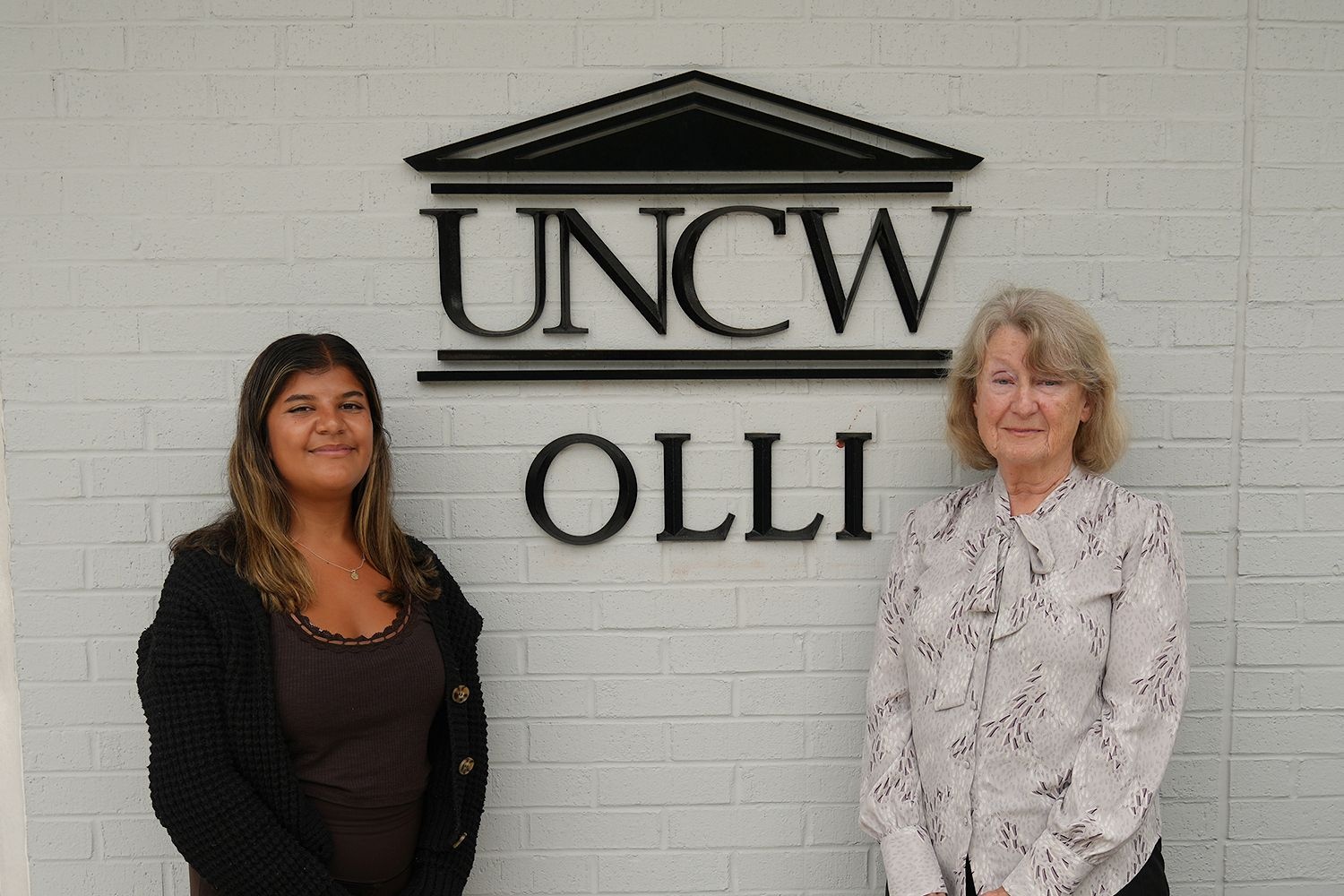
Photo: JackBailey/UNCW
Janaki Beharrysingh, a first-year student enrolled in UNCW’s Master of Science in Applied Gerontology program, was drawn to the field through her own personal experiences with older adults. Her path began while earning her undergraduate degree in health at UNC Asheville. Working at the Osher Lifelong Learning Institute (OLLI) introduced her to the realities of aging beyond what she had experienced in her life thus far. “My experiences at OLLI helped me realize how diverse the experience of aging can be and how much I enjoyed building relationships with older adults,” Beharrysingh said.
Soon after, she began to engage in volunteer and internship opportunities which included delivering food to homebound older adults through the Buncombe County Council on Aging and working in independent living, assisted living and skilled nursing settings. Through these experiences, she realized that age differences do not prevent meaningful connections between generations. “Older adults can have such a wide range of different life experiences and talents that intergenerational relationships can reveal more similarities than differences,” Beharrysingh said.
At UNCW, Beharrysingh is a graduate assistant at the Osher Lifelong Learning Institute (OLLI), where she helps set up classes, assists instructors with technology needs and supports other office operations. Through her GRN 501: Aging and Society course, she also participates in OLLI’s Sages and Scholars program, where students are paired with older adults for activities such as watching films, reading books, visiting community sites and experiencing a day in the life of their partner. Beharrysingh is also a member of the 2026–2027 cohort of the Rural Interprofessional Longitudinal Scholars (RIPLS) program, an initiative that aims to prepare the next generation of health and human service professionals to serve North Carolina’s rural communities. Additionally, she works as a research assistant under Dr. Tina Newsham, professor and program coordinator for the UNCW Applied Gerontology program.
Her graduate studies have further expanded her understanding of aging beyond physical health and longevity. Classes that have made a lasting impression on Beharrysingh include Cultural Representations of Aging (GRN 524), Women and Aging (GRN 518), Aging and Society (GRN 501) and Health and Aging (GRN 525). These classes have exposed her to the cultural, social and policy dimensions of aging, including the ways ageism appears in media and society. She believes this interdisciplinary approach helps future professionals see older adults as multi-dimensional people and treat them with dignity rather than reducing health issues to simply "being old."
Looking to the future, Beharrysingh hopes to gain experience working with local or state organizations in program implementation and advocacy work before eventually pursuing a health-related research doctorate. “I’d love to bring together research, community engagement and advocacy to make a difference for older adults,” she said.
Soon after, she began to engage in volunteer and internship opportunities which included delivering food to homebound older adults through the Buncombe County Council on Aging and working in independent living, assisted living and skilled nursing settings. Through these experiences, she realized that age differences do not prevent meaningful connections between generations. “Older adults can have such a wide range of different life experiences and talents that intergenerational relationships can reveal more similarities than differences,” Beharrysingh said.
At UNCW, Beharrysingh is a graduate assistant at the Osher Lifelong Learning Institute (OLLI), where she helps set up classes, assists instructors with technology needs and supports other office operations. Through her GRN 501: Aging and Society course, she also participates in OLLI’s Sages and Scholars program, where students are paired with older adults for activities such as watching films, reading books, visiting community sites and experiencing a day in the life of their partner. Beharrysingh is also a member of the 2026–2027 cohort of the Rural Interprofessional Longitudinal Scholars (RIPLS) program, an initiative that aims to prepare the next generation of health and human service professionals to serve North Carolina’s rural communities. Additionally, she works as a research assistant under Dr. Tina Newsham, professor and program coordinator for the UNCW Applied Gerontology program.
Her graduate studies have further expanded her understanding of aging beyond physical health and longevity. Classes that have made a lasting impression on Beharrysingh include Cultural Representations of Aging (GRN 524), Women and Aging (GRN 518), Aging and Society (GRN 501) and Health and Aging (GRN 525). These classes have exposed her to the cultural, social and policy dimensions of aging, including the ways ageism appears in media and society. She believes this interdisciplinary approach helps future professionals see older adults as multi-dimensional people and treat them with dignity rather than reducing health issues to simply "being old."
Looking to the future, Beharrysingh hopes to gain experience working with local or state organizations in program implementation and advocacy work before eventually pursuing a health-related research doctorate. “I’d love to bring together research, community engagement and advocacy to make a difference for older adults,” she said.