
Where Students Shape the Future of Brain Health Research
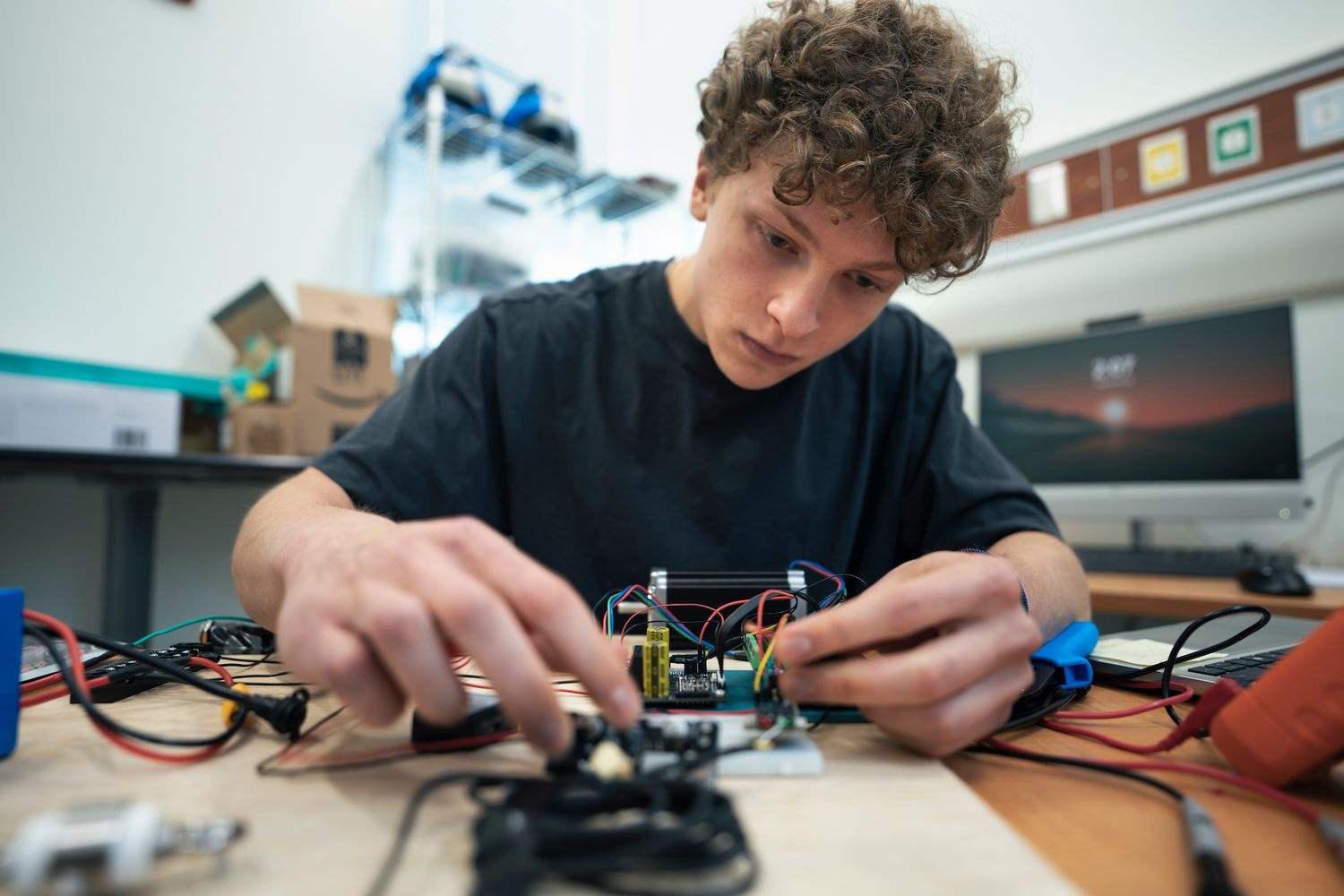
Photo: Jeff Janowski/UNCW
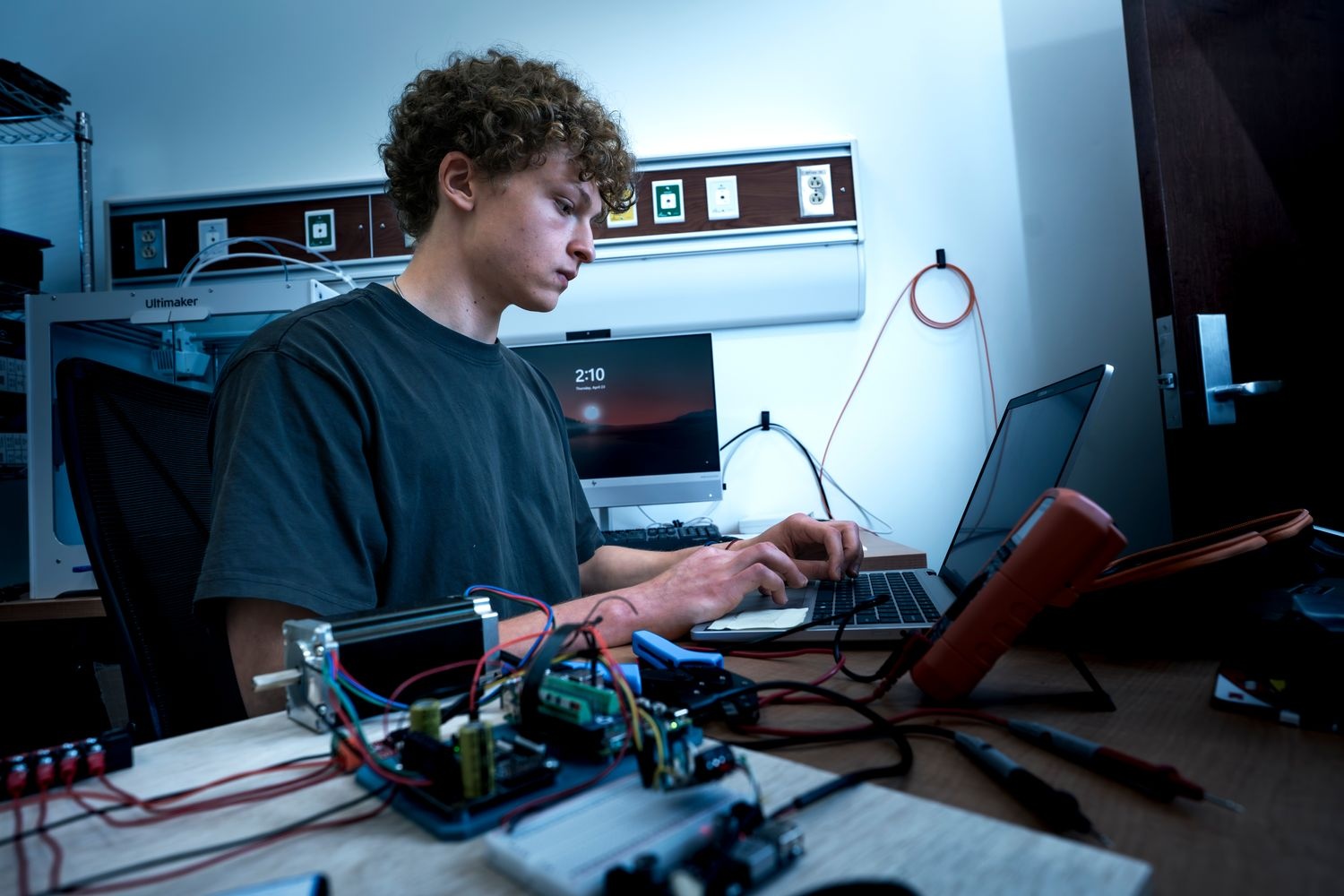
Sophomore Holden Krueger began his role as a research assistant with UNCW's Brain Health Resilience (BHR) Research Hub last fall.
Working with the team behind the Neck Strength Assessment Tool, the intelligent systems engineering major helped refine a prototype of the device, which measures neck strength to determine if greater strength helps mitigate the risk of traumatic brain injuries, particularly concussions.
Krueger still marvels at the opportunity to work on a state-funded research project, which came up after just one year of engineering courses. "This project has given me more skills than I could have imagined. Besides the obvious hard technology skills, I've gained a new perspective on learning to do things that I've never done before. It's incredibly rewarding. I mean, I'm sitting in team meetings with four Ph.D.s, and I'm a sophomore," he said.
As part of the UNCW Research Hub initiative, BHR was selected to encourage interdisciplinary, collaborative brain research, leveraging strengths across academic departments. The hub's four main areas of focus are biopharmaceutical drug development, neuroplasticity to improve brain health, prevention of head and neck trauma, and substance use and data science.
From the start, the hub's design included rich research opportunities for students.
"We do a really great job of attracting students who want to be involved in research and hands-on training," said Rachel Kohman, a professor in the Department of Psychology and BHR hub faculty coordinator. "Their contributions are indispensable to our work, and we engage them at a high level. We treat them as we treat our fellow faculty colleagues."
"While the students help us meet our objectives, they gain marketability, hone their skill sets and learn to adapt to working with different people across the labs," she added.
Student researchers contribute well beyond the laboratory, she added. In the hub's first two years, 35 students have co-authored research papers with faculty, which resulted in 12 published articles and 18 additional manuscripts under review or in preparation.
Doctoral student Kerstin Panter, clinical psychology, presented at the American Psychological Association 2026 conference on her thesis work related to medical mistrust among clients receiving treatment for addiction. Her thesis is closely aligned with the hub, where she conducts field testing of a wrist-worn device that collects biometric data to help monitor opioid use and withdrawal.
"We're gathering data about clients' experiences with the device," Panter said. "If clients don't wear the device or it isn't a positive experience, then we can't get good data. This population is often mistrustful of medical providers because many developed their dependency on opioids prescribed by a doctor."
Doctoral student Lev Oykhman, pharmaceutical chemistry, works on a hub project to develop novel treatments to help patients improve recovery after a stroke. Using computational models, he screens huge numbers of potential drug candidates and then conducts further lab tests on those that look promising.
"Stroke is the leading cause of long-term disability in the U.S., and stroke damage can continue in the brain even after blood flow is restored," he said. "There is a real gap in the market for drugs that provide treatment post-stroke. Working with a team of experts to identify and develop a drug to help people recover – that's what gets me out of bed in the morning."
To better understand neurodegenerative diseases such as dementia, doctoral student Jackie Kerler, biology and marine biology, is working with a team to study an unlikely model: sharks. Through two faculty project leads, the BHR hub is leveraging research on shark brains that may translate to improved brain health in humans.
"Unlike humans, sharks' brains grow throughout their entire lives," Kerler said. "By studying rates of growth in particular cell types, we gain insight into their neuroplasticity mechanisms. For example, how do environmental stressors or pollutants affect brain health? There is so much we can learn from interdisciplinary projects."
The students noted that UNCW's reputation for hands-on research opportunities and student-faculty interaction influenced their decision to study here.
Kerler said her work with the hub is preparing her for an academic career. "I'm learning interpersonal skills along with the research skills," she said. "I've mentored undergraduate students with the hub since my first semester. I hope to become a professor one day and mentoring students is important to me. My work with the hub is providing me with valuable skills and insights that will help me further my research interests."
For Krueger, the experience reshaped his view of what's possible as an undergraduate researcher. "I want to do something professionally that gives me the same passion that I get from working on this project."