


Ryan Vargas ’26
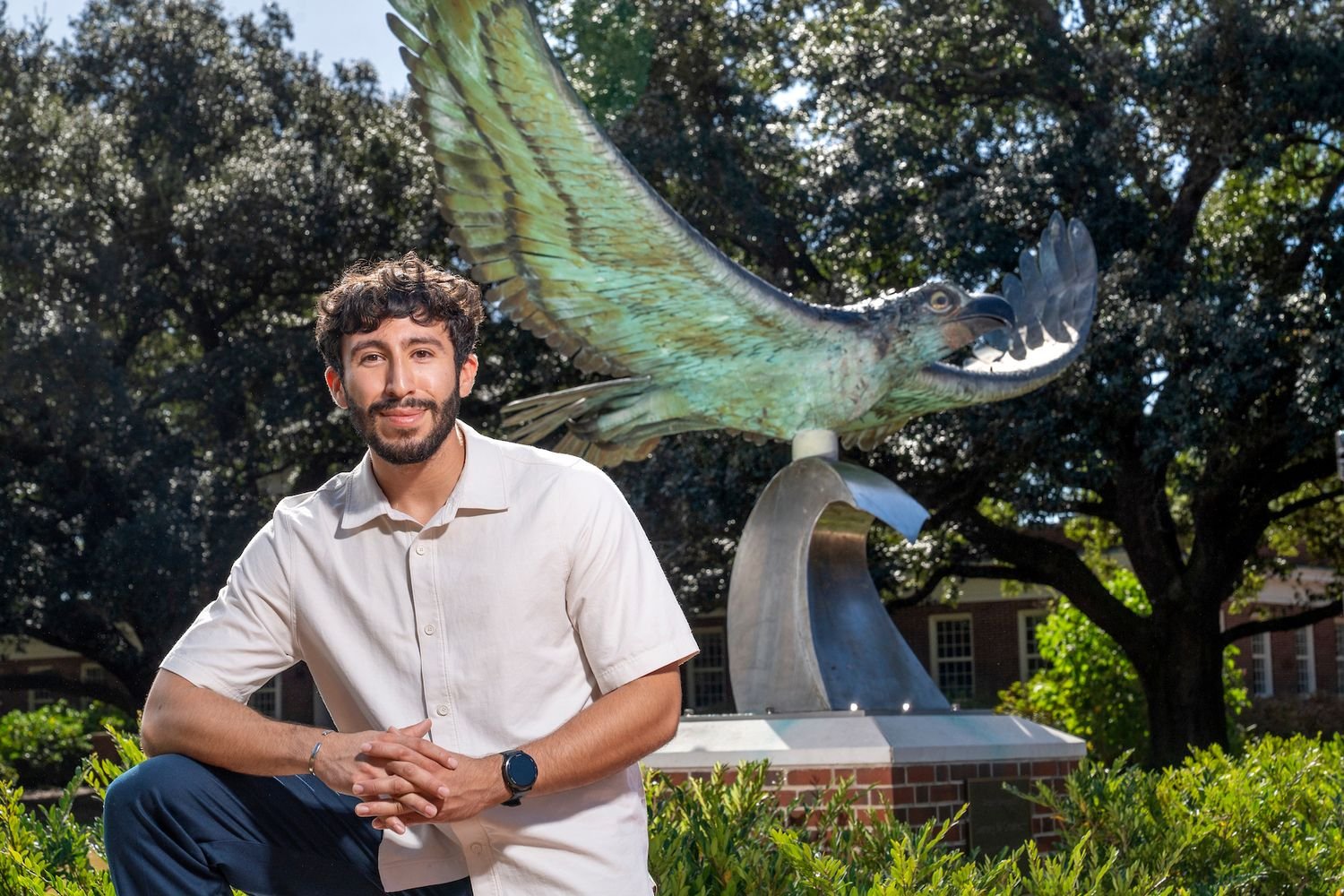
Photo: Michael Spencer/UNCW
After serving four years with the U.S. Marine Corp, Ryan Vargas’s transition into the classroom has proved a success. From interning with Amazon, to becoming a published researcher, Vargas embodies the hard work and resilience of being a Seahawk.
“When I left the military and started school, I felt like I stuck out like a sore thumb. I was older than most of the students in my entry-level classes, and it was a little difficult to relate to everyone,” Vargas said. “I was also going from a structured lifestyle to one where I pretty much had to create my own structure, so it took some getting used to.”
Yet, Vargas was able to find a groove and use his military experience towards his college achievements.
“The military made me more comfortable taking initiative and talking to people. That's helped me a lot in school, whether it's asking a professor about research or going after an internship opportunity,” Vargas said.
After arriving at UNCW to study computer science, Vargas was introduced to Damir Pulatov, who presented him a research opportunity that led to a published paper. Vargas' research focused on high-performance computing (HPC), which uses networks of powerful computers to process massive datasets and perform complex calculations far faster than a standard computer. His work earned recognition at the ACM International Symposium on High-Performance, Parallel and Distributed Computing (HPDC), a premier annual conference where researchers and industry experts share advances in high-performance computing, artificial intelligence and emerging technologies.
“With the HPC research, we're trying to help researchers spend less time figuring out the technology and more time doing their work. It's the same idea with my business. I like finding a problem that people deal with all the time and figuring out how software or AI could make it easier,” Vargas said. “If something I build saves somebody time or helps their business work better, that's the kind of impact I'd like to have.”
Pulatov also helped Vargas land a dream internship with Amazon in Seattle, Washington. CSC 231 prepared Vargas for technical interviews by strengthening his understanding of algorithms and data structures, while research with Pulatov further sharpened his skills.
“I got to explore different areas of computer science, including working with large language models, and learn how they can make certain tasks more efficient,” he said. “It gave me some experience outside of class that I could talk about during my interviews.”
Vargas was on the Alexa PAPI team, an internal Amazon Alexa AI science initiative tasked with building next-generation proactive and autonomous agentic experiences across Amazon.
“It showed me what working as a software engineer at a large company is like. There is more to coding than I initially thought, such as understanding an existing system, planning your approach, talking through ideas with your team, and making sure the work you're doing is useful,” Vargas said. “It made me want to keep growing as a developer, but it also made me more interested in building my own projects and eventually growing my own business.”
A week before leaving his internship, Vargas learned he was greenlit for a return offer.
“I was excited because it felt like all the work I put in over the summer had paid off," said Vargas, who will graduate in December 2026.
“I definitely didn't go into college thinking I'd get to do research, publish a paper and intern at Amazon,” he said. “A lot of those opportunities came from putting in the extra work and being willing to ask questions or try something new. You might not know where it's going to lead, but if you keep putting yourself out there, you can end up doing things you probably never expected.”